Pages

Tuesday, July 24, 2018

Baby Wuz and Other Blunders

The refugees in Moria speak a variety of languages - but Arabic is the most common since currently more of the refugees come from Syria than any other country.

None of our missions team went to Greece with any skill whatsoever in Arabic!  During our two weeks there, we all learned a few words, and most of us were inspired to learn to speak Arabic on at least a toddler level. Though we were trying to communicate the gospel without words (see this post), words are so helpful in communication!  That seems obvious, but spending a few weeks communicating with hand signals, charades, poor drawings (think "Pictionary"), and cell phone photos made me really appreciate the gift of words (it also made me realize again what a curse the Tower of Babel was). 

Here are some of my humorous moments attempting to use Arabic:

1) Baby Wuz

In an attempt to become more familiar with the women and children visiting Gateways2Life, I decided to start asking the moms their names.  I knew they didn't know English, but I thought if I just asked "What's Your Name?" enough times, they would figure it out.  A lady was dropping off her baby in the kid's area, and I asked his name.  After I repeated the question several times while pointing at her and the baby, she pointed at the baby and said "Wuz."  She pointed at herself and said "Zenam."  I recorded these words in the Notes section of my phone.  I then proceeded to carry the baby around and tell everyone his name was Wuz.  Later, I looked at my notes.  Wuz, Zenam.  (if you say them together, you realize the problem).  The mom was just trying to repeat after me!  I have no idea what that kid's name was.  He just became "Baby Wuz" to our whole team.


2) Not a Girl

A young mom asked me if we had any clothes for her baby.  There were a few items stored in boxes in the "attic."  Melanie was holding the baby and said, even though he's dressed like a boy, I think it's a girl - pointed out the painted toenails and little bracelet.  I searched for some pink clothes - unmistakenly little girl clothes because I felt a little sorry for the little girl having to wear hand-me-down boy clothes.  When I returned and showed the mom, she looked at them and said "no."  I wasn't sure if she was saying no because of the pink or because they wouldn't fit.  Melanie and I tried all the charades we knew to ask if it was a boy or girl.  Finally, the young mom laughed and pulled down her son's diaper!  This communicates in any language!

I was blessed to get to hold this little boy and pray for him several times - that he would leave Moria for a better place, be introduced to Jesus, and be protected by God (who affords much better protection that this little "anti-evil eye" charm that he wore).


3)  Not Moria, but Afwan?

Our third day on Lesvos, a brand new baby showed up in the Center, and a woman loudly proclaimed over and over "Born in Moria!  Named Moria!"  I naturally thought the little girl's name was Moria (I knew at least I had gotten the girl part right).  So our last day there, I asked the mom the baby's name using my best Arabic for "What's your name?"  which I had learned to say something like "Shoo esmek?"  She said Afwan.  I thought that was a pretty name, but as I started to mull it over, I realized that Afwan sounds like the Arabic for "You're welcome" and "Shoo esmek?"  sounds a little bit like "Thank You."  I did not have the nerve to ask again.  She will just be baby Moria to me.  


4) Husband Not Beheaded After All

You may have read an earlier post where I talked about my "conversation" with a young woman who said her husband was beheaded while her young son watched.  I am happy to report that I misunderstood!  I realized this when she showed me cell phone photos of her and her husband's trip through Syria, Turkey, boarding a rubber raft, being picked up by an English rescue ship, and in Camp Moria.  He is alive and well!  She continued to talk about beheadings and such (with unmistakable hand motions) but I began to understand that these were things she saw, but it did not happen to them.  This is why they fled.  She said Syria was beautiful.  I looked up photos on my phone and at first just saw soldiers and bombed out buildings.  Then I googled "beautiful photos of Syria" on my phone and showed them to her.  She said "Ah, Syria, Syria!" and began to cry.  In this case, a picture was worth a thousand words.  

I can also say with confidence that this woman's daughter's name is Lara and that they aspire to join relatives in Canada. 


5) The Arabs all love my name!

When I say my name is Susan, they smile.  They tell me it's Arabic (I thought it was Hebrew, but I don't bring that up).  They can not only say it, they know what it means.  So with all my blunders, I've got that going for me!  


Tuesday, July 17, 2018

The Tale of Two Pharaohs or Two Ways to Look at Refugees

Note: This is meant to be a post about the European refugee crisis, but I also think there is application to how refugees and immigrants are viewed in the United States.  


I love this quote

"Now you have a distinct choice as you hear news reports about refugees arriving to your community.  Will you, like the pharaoh of the Exodus, hear about masses of people and presume they are a threat?  Or rather than labeling them from a distance, will you get to know them? The pharaoh who saw Joseph's potential and welcomed his family ended up being blessed in return - as did the entire country of Egypt, which was spared the worst effects of famine because God providentially placed this particular foreigner in their land, subverting the unjust circumstances that compelled the migration."

 From the book Seeking Refuge

During our last few days here, we've gotten to hear a few local Greeks complaining about the refugees here on the island.  We met one older lady (at least 75) down at the local Aegean swimming hole who thanked us for wearing swimsuits and said that the refugees have ruined their spot by swimming in their clothes (the women) or in their underwear (some of the men).  I must admit it was a little ironic to hear her complain about their attire when her more than ample girth could not be well-contained in her bikini, but I let her vent.

The refugee crisis has been hard on this island.  But before there was a refugee crisis, there was an economic crisis.  The tourist business was drying up before the refugee crisis hit.  And now the hotels and restaurants in Panagiouda are booming with business from volunteers who have come from around the world to help.  Our little hotel is full of evangelicals working with a variety of NGOs.  Our hosts are the most gracious people you would ever meet.


The locals here can see threat or opportunity (or perhaps both).  Starting when we leave next week, Gateways2Life will not be staffed by volunteers but by hired local Greeks (and one former refugee with asylum).  Though some have a heart for refugees, few are believers.  Please pray to the Lord of the harvest that he will send workers.

Sunday, July 15, 2018

What's Terry Doing on a Woman's Mission Trip?

I thought a more lighthearted post might be in order.

Yes, this is indeed a women's mission trip that I was asked to lead.  We are working in a center that serves women and young children who are refugees here on Lesvos.  Here, women can remove their head coverings and take a warm shower.  So you can see why men are not allowed in the center!

But we were requested to bring one man with our team. Originally, another married couple had indicated interest in coming, so Terry planned to stay in Knoxville.  But since we both had such a meaningful and fun trip here last summer, when that couple couldn't come, Terry stepped up.

There are seven women and Terry.  And I get to be in charge of him for two weeks.  LOL.


Unlike some men who don't like to talk or share feelings, Terry is quite at home with conversation.  So I don't think that traveling with women has been any big deal to him.

Terry fills a great need at the center each day.  He is the gatekeeper - keeping out both men and boys over about 5 years old.  He can only let in a certain number at a time.  He has to explain this without speaking the language.  He visits with the men and plays with the boys while they are waiting.  Towards the end of this first week, the staff at the center hired a man named Ali, who'll be doing this job when we leave.


We are also hoping that he will be an encouragement to William, who started this ministry to women but would probably like to talk to an American male now and then.  Sometimes you gotta get away from the estrogen.


Terry has also served as our bodyguard, valet, strong arm, and photographer.


But his most important job away from the center is as our driver.


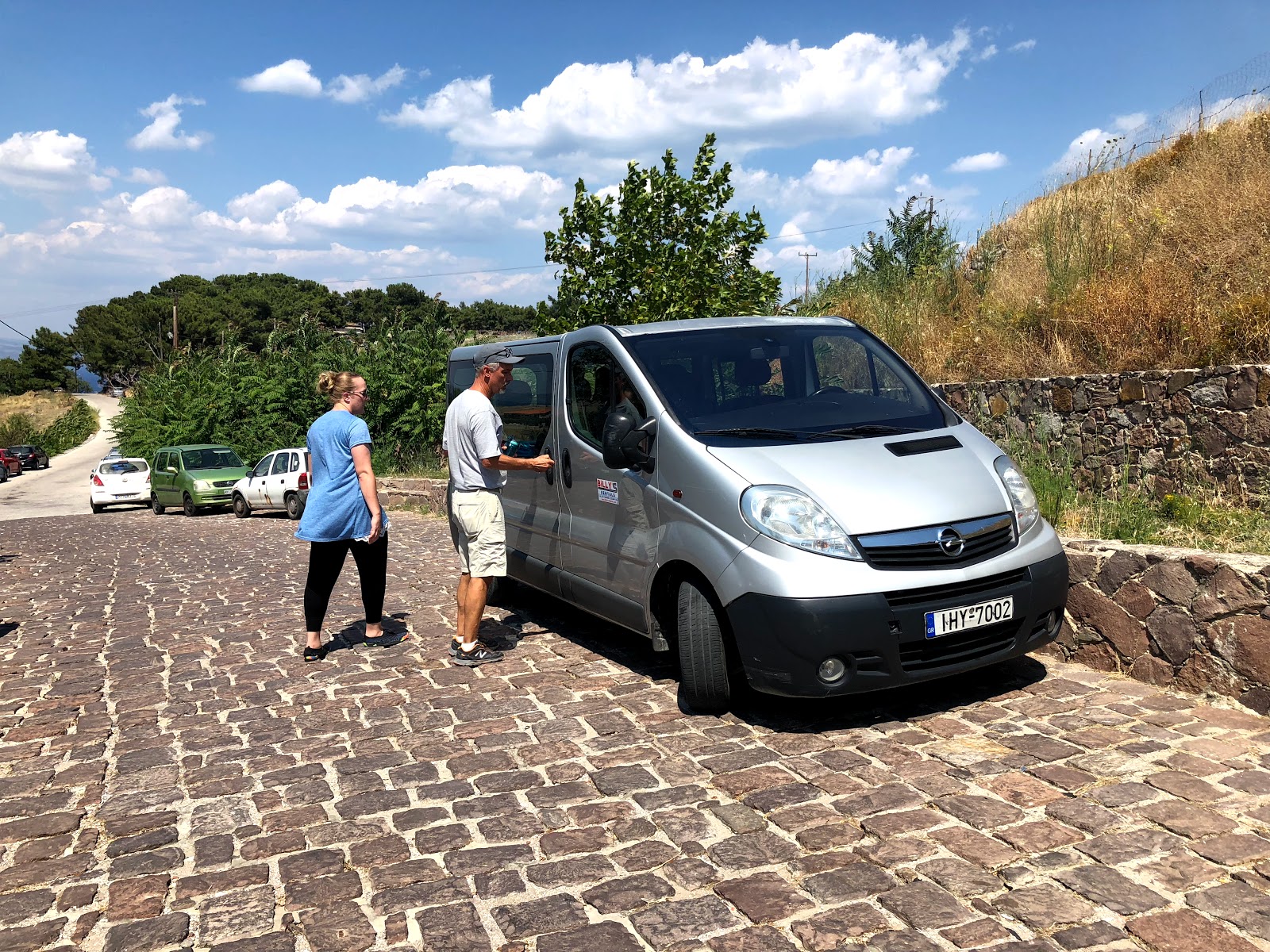
We don't have a far drive to the center each day but parking in Panagiouda is a challenge I'm glad I don't have to undertake.  One afternoon we drove to a nearby archeological site and on the way back took a road that got narrower and narrower until our van barely fit through with both mirrors folded in.  We literally had no more than an inch or two on each side.  This is where we emerged.


This weekend we drove all over this island on very challenging roads (pretty much like The Dragon back home).  He may have made a few women carsick.  Sorry about that. Wish I would have taken photos to show the roads but I was hanging on for dear life AND HE WOULD NOT SLOW DOWN!  I must also say that it's a good thing speed limits are not enforced here or he would be sitting in a Greek jail instead of just sitting behind bars at the women's center.


Saturday, July 14, 2018

Sharing the Gospel Without Words

Here at the end of our first week of work, I can honestly say that our work is making a difference in the lives of the women who visit the center.  But it is also making a difference in us.

I had intended to blog more often, but the work is tiring, and I have used my downtime in other ways.

On Monday we learned our jobs - operating the showers,


(And no, we don't hose them down - Melanie is just cleaning the showers after one round of women had just showered.), childcare,


and "talking" with women in the main room.It is very hard when you don't know the language, and there are several languages spoken here - mostly Arabic and Farsi, but also Somalian - or whatever they speak in Somalia.  God has been gracious to intersperse a few women who speak a little English, and we have also been able to communicate in other ways.

On Tuesday, partly due to pressure from a donor to give some of the supplies we had more quickly (there is not that much, but we did have some strollers, diapers, feminine hygiene products, etc), we started giving things right and left. We were practically mobbed with women who were thrilled to be getting things.

We saw the downside to this approach on Wednesday when people showed up asking for things we did not have any longer.  There was confusion, disappointment, and even anger.  I had about twenty women bombard me with requests.  One woman in particular seemed very distressed.  I told her I was sorry, then just really looked her in the eye and said it again. I started to cry.  We suddenly had a heart connection.  She sat down and with hand motions explained that her husband had been beheaded and that her young boy had seen it. She is in Moria with her two children.  Our tears eventually turned to smiles. She has been back every day.

Many on our team had similar stories. When you don't have words, God gives us other ways to communicate the love of Jesus.  It's hard for a talker like me.

Some women told us Thursday  (through an English interpreter) that this center is the best thing that has happened to them since arriving.  They can come and just forget Moria for awhile.

More later.  Pray for our team, for Gateways2Life, and for these women we encounter.


Thursday, July 12, 2018

What's Going on in Lesvos?


Our team arrived on the island of Lesvos on Sunday night to work with Gateways2Life for the next two weeks.

This is the second time I have been on this island in just a year.  I am struck again by its beauty and the friendliness of its people, which we are fortunate to get to enjoy each evening when our work is done (the refugees are not so lucky).


William Splitgerber, director of Gateways2Life, gave us some background which was quite interesting.  Early in the last century, Turkey expelled 1.5M people of Greek heritage, effectively making them refugees.  Many of them fled  to Lesvos, only 4 miles away by boat.  It was a logical place to go since Lesvos had been under Turkish control from 1462-1912.

Present day islanders are descendants of those refugees and they initially met the current refugees from the Middle East with open arms.  The citizens of Lesvos were actually nominated for a Nobel peace prize in 2015! They are still kindhearted for the most part but are starting to be very concerned. For some perspective consider that there are 8000+ refugees living in Camp Moria (which was built for 1800).  The little town we are staying at nearby has less than 1000 residents!  Its economy depended heavily on tourism which has pretty much screeched to a halt since the refugees arrived. And worse, while refugees used to funnel through Lesvos quite quickly to Athens and then to other countries, those doors are closing - stranding these people here - and stranding Lesvos with lots of problems that they have no resources to handle.

This is a big opportunity for Christians to practice the Great Commandment to love our neighbor.  While there are several secular humanitarian groups here,  I am happy to say that through the grace of God, the UN has asked EuroRelief to run Camp Moria.  It is a branch of Hellenic Ministries - a Christian organization!

And the group we are with - Gateways2Life-  operates a center for women and children just outside the camp.  The main physical need they are meeting is for safe showers and laundry.  It is a big effort! The center here is just opening (last year we were here for the opening of another center outside a much smaller camp run by the city of Mytilene). They hope to run the center with a Greek local staff, but our team is being the beta testers and allowing them to delay this operating cost for a few weeks and do their interviewing. And it is allowing us to learn a lot and have our hearts impacted (more about that in the next post).


Tuesday, July 10, 2018

Acclimating in Athens

I have the privilege of leading a team of women to Greece this summer to work with refugees in the island of Lesvos through an organization called Gateways2Life.  More about that in future posts.   It’s actually not true that our team is entirely made of women, for Gateways2Life requested we bring a man to serve as gatekeeper at the center.  So Terry agreed to come along as our bodyguard, door opener, bag carrier, driver, etc.

After leaving town at 3:30 am, we arrived with rather bleary eyes at the international terminal.


We immediately realized we were supposed to go to the domestic terminal instead, but we're sticking with this photo since the other terminal is under construction and not nearly as photogenic.  You know you're with a good group of women when nobody minds being photographed without makeup!

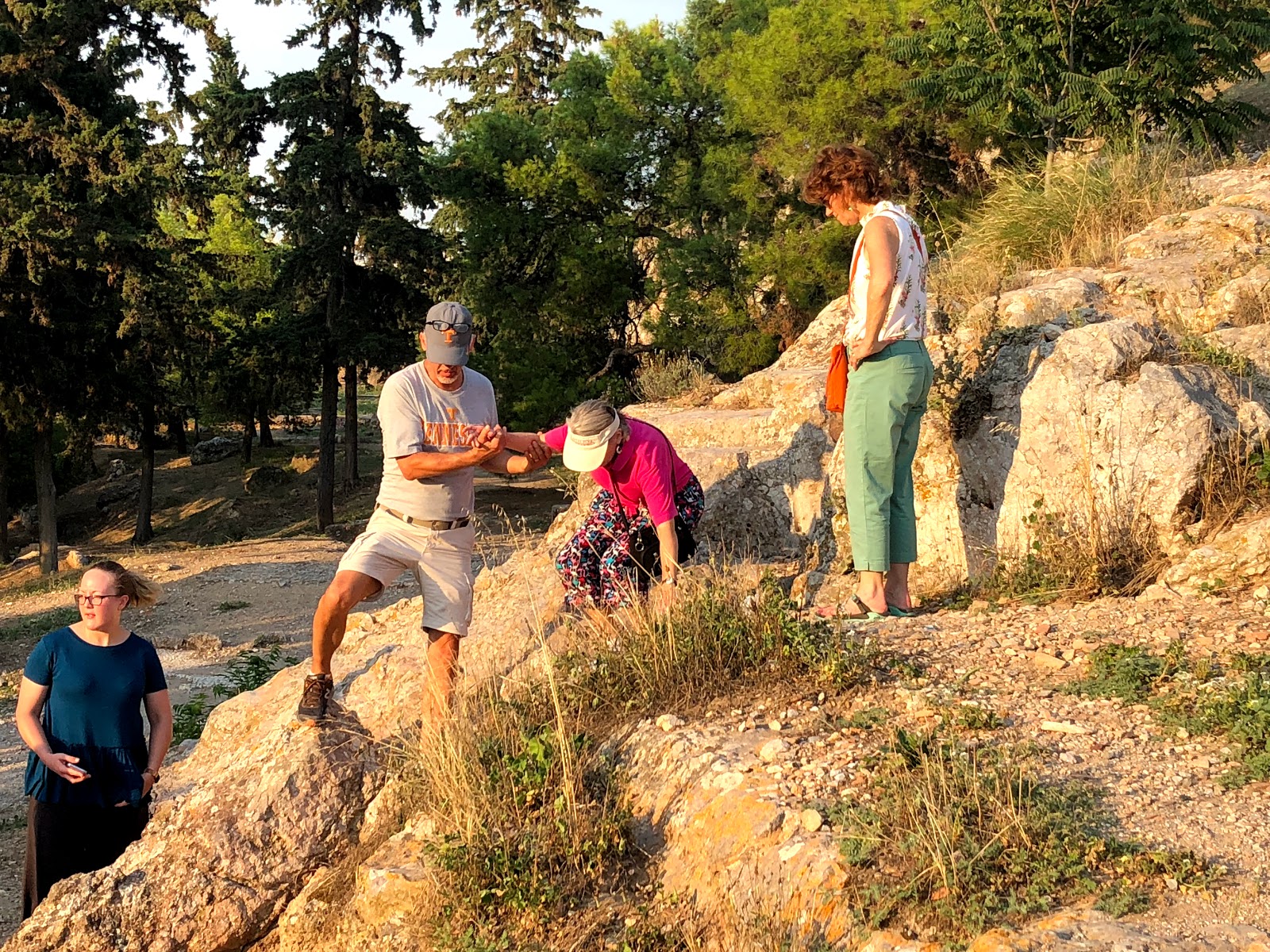
Our group is headed to Lesvos but to get there you have to first go to Athens. So we took advantage of our 30 hours there to take in the sights and start bonding as a team. In this first part of thus trip that bonding was facilitated by getting lost either as a group or individually, jet lag, trying all sorts of transportation including bus, subway, and passenger train,  sharing a single shower, long walks, taking in iconic sites like the Parthenon, Hadrian's Arch, and Mars Hill, eating some great meals, and even getting to church on time (so maybe NOT on time, but we made it). The bonding has begun!


Monday, June 25, 2018

To Montreal and Back

Caleb spent a few weeks living in Montreal in June (he was supposed to be there all summer, but that's a long story and is really Caleb's tale to tell).  When we knew he was going to be returning to Knoxville, Terry and I flew up there to meet him and drive back with him.  I was excited to see where he was living.
Here's the view from outside his apartment

And here's the view from inside

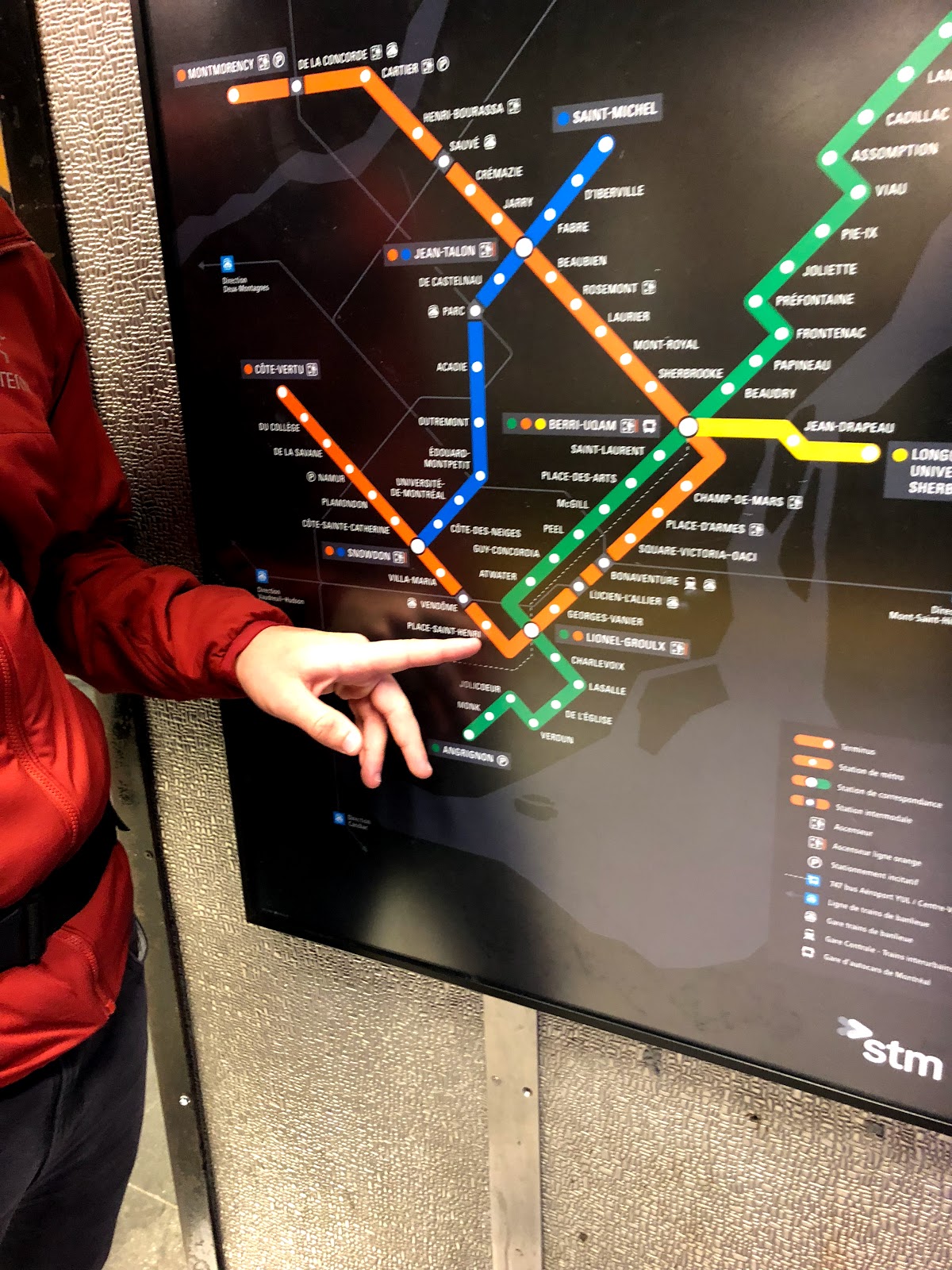
We only had one day there, so he gave us a foodie tour of Montreal (this was basically the way I gained all the weight I had lost for Rebecca's wedding in one weekend).  We started out by walking to the closest subway stop:


Caleb told us that one thing he had learned was how he'd really prefer to live in a city where he could drive around instead of taking public transportation.  

Next we visited the old part of the city:


He took us to eat the locally favorite dish - poutine - which is french fries topped with cheese curds and brown gravy.  Even though I like those items individually, I was not a fan of the combination.


He also took us for dipped ice cream at La Diperie (a big thumbs up!) at  just one block from his apartment.  The next morning we went to eat at L'Avenue.  This was probably the biggest and best breakfast I have ever eaten!  


Next we jumped in the car and headed back to the U.S.A.  First stop, The Adirondacks.


Caleb decided that he wanted to return via Scranton, of "The Office" fame.  We enjoyed our time in the "Electric City" - eating another enormous meal at an Italian restaurant there.  We took a lovely walk while waiting for our dinner reservation.


And last, but not least, we stopped to see the newlyweds in Virginia and had some fun hiking down by the river.